
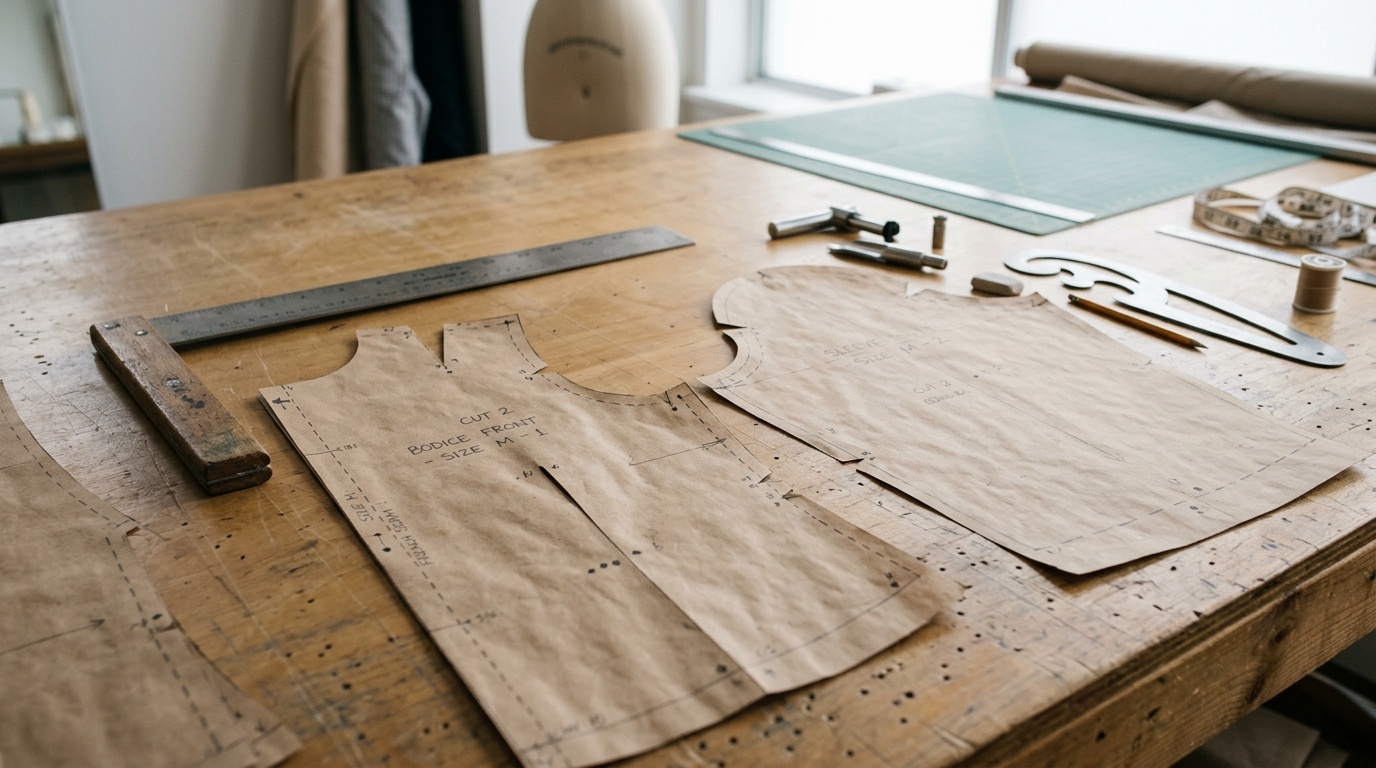
A sewing pattern might have the right size and shape, but that doesn’t mean assembly will be easy. When joining multiple pieces, clear reference points are vital. This is why notches are essential in professional pattern making.
Notches may seem like simple marks, but they guide how pieces fit together during sewing. When placed correctly, they make construction clearer and faster.
What Is a Notch on a Sewing Pattern?
A notch is a small mark on the edge of a pattern piece. It helps match two or more pieces that will be sewn together.
For example, a sleeve pattern has notches that align with specific points on the armhole. These notches help the sewer align the sleeve properly.
In a production setting, this reference reduces confusion during assembly.
Why use notches?
If you are drafting your own patterns, you will be wanting to add notches to your patterns to make it easier to assemble the garment. If you are clever about where you put them, having well placed notches can help you assemble a pattern without instructions (which is handy if you are drafting your own patterns, as you won't have any!). Notches will help you know which piece is the front or back, what seam allowance is required and if there are any special design details such as pleats.
If you are designing patterns for other people, I think it is even more important for you to take the time to notch patterns correctly. It's also about making a pattern that creates an enjoyable and memorable making experience, and I believe that attention to detail is a great way to do this.
Why Are Notches Important?
Pattern pieces can be shaped in ways that make it hard to see where to match them. A sleeve, for instance, may curve, making it unclear which part is front or back.
Notches provide extra information. They help identify:
● Matching seam points
● Front and back sections
● Sleeve attachment points
● Collar and neckline positions
● Pocket placement
● Construction reference points
● Balance positions
Their use depends on the garment and method.
Single and Double Notches
Different notch systems convey different information. A single notch shows one matching point, while a double notch indicates another.
For example:
● Single notch → front sleeve reference
● Double notch → back sleeve reference
Patterns should maintain a consistent marking system. Consistency is crucial.
Notches Help Match Pattern Pieces
Notches make matching pieces easier.
Consider a bodice and sleeve. Both have curved edges. Without clear reference points, the operator must rely on measurements and judgment.
Properly placed notches allow the operator to match points before sewing. This helps keep the garment’s shape.
Notches and Sleeve Setting
Sleeves show why notches matter. A sleeve must align with the front armhole, back armhole, shoulder point, and underarm.
An incorrectly positioned sleeve can cause:
● Twisting
● Pulling
● Uneven balance
● Restricted movement
● Incorrect positioning
● Wrinkles
Notches help ensure the sleeve is correctly placed, offering important construction references.
Where Should Notches Be Placed?
Notch placement varies by garment and construction. They are usually positioned at key points, such as:
● Centre front
● Centre back
● Shoulder points
● Side seams
● Sleeve sections
● Collar attachment points
● Pocket positions
● Waist seams
● Panel joining points
Each notch should have a purpose. Adding unnecessary marks can complicate the pattern.
Notches vs. Other Pattern Markings
Notches are just one type of information on a pattern. A professional pattern may also include:
Grainline
Indicates how the pattern piece should align with the fabric grain.
Seam Allowance
Shows the area outside the sewing line.
Fold Line
Marks where a pattern piece should be folded against the fabric.
Drill Holes or Marking Points
Identify specific construction or placement locations.
Cut Quantity
Indicates how many pieces to cut.
Each marking serves a unique purpose, helping transform a pattern into a functional document.
What Happens When Notches Are Missing?
Garments can be sewn without notches, but it can lead to more manual checks. This creates problems when:
● Matching curved pieces
● The front and back pieces look similar
● Positioning sleeves accurately
● Joining multiple panels
● Producing garments at scale
In larger workflows, clear communication is essential. Patterns shouldn’t force the team to guess.
Common Notching Mistakes
1. Missing Important Matching Points
Without a reference point, assembly can become unclear.
2. Incorrect Notch Placement
Notches that don’t match can cause confusion.
3. Inconsistent Notch Systems
Using different conventions without documentation makes patterns hard to read.
4. Too Many Notches
Not every point needs a notch. Too many can reduce clarity.
5. Not Checking the Final Pattern
Review notches after modifications to ensure they remain useful and accurate.
Do Notches Change During Pattern Grading?
They can. When grading a pattern into different sizes, the relationship between pieces changes. Important matching points need to align across sizes.
For example, a sleeve notch should still match the armhole after grading. This shows grading is more than just resizing; the pattern must stay functional at each size.
How Notches Support Factory Communication
A sewing pattern is also a communication tool. Designers may understand the intended construction, but factories need clear information.
Well-placed notches say:
“These two points should meet.”
This clarity is especially valuable when patterns are shared with different teams. Clear communication reduces unnecessary questions and corrections.
A Practical Example
Think of a short-sleeve T-shirt pattern. The sleeve has:
● A front notch
● A back notch
● A sleeve center point
● An underarm joining point
The bodice has matching reference points. During assembly, the operator can align these points before stitching.
If the sleeve is rotated or placed incorrectly, the reference points won’t align. This makes construction easier to manage.
How to Check Notches Before Sending a Pattern
Before delivering a sewing pattern, review:
Are matching pieces clearly identified?
Do corresponding notches align?
Can front and back sections be easily distinguished?
Are sleeve reference points clear?
Have important points been marked?
Are markings correct after revisions or grading?
These checks help prevent small issues from becoming bigger production problems.
The Practical Takeaway
Notches may be small, but they are key for practical garment construction. A good pattern does more than provide shape; it shows how pieces fit together.
When notches, grainlines, seam allowances, and other markings are precise, the pattern becomes clearer and more reliable. For brands, these details enhance efficiency in moving from design to final product.
Final Thoughts
Notches are small details, but they play an important role in accurate garment construction. When pattern pieces have clear and correctly placed notches, they are easier to match, sew, and communicate during production.
For brands, careful pattern development can help reduce confusion and support a smoother process from sampling to production. If you need support with sewing patterns or pattern grading, our team can help.